Methodist Hospital central tower in San Antonio, Texas

Methodist Healthcare System

Emergency Medicine Residency Program

Welcome to Methodist, where we don't just wear the badge — we live the mission.

Patients served

608,000 / year

ER visits

469,000 / year

Employees

12,000+

Hospitals

11 full-service

Beds at Main

1,048

ICU beds at Main

184

About Methodist San Antonio

Methodist Healthcare System of San Antonio is one of the largest hospital systems by census in Texas, with a network of 11 hospitals serving communities across the region. Methodist Hospital of San Antonio stands as the largest hospital in Texas by many measures.

Our mission is to deliver exceptional, cost-effective, and accessible healthcare. For resident physicians, that means training with a diverse patient population while being mentored by an outstanding team of faculty. In 2023, Methodist Hospital — the home base of graduate medical education — opened a dedicated GME space for simulation, didactics, and teaching, along with modern resident workspaces and a dedicated continuity clinic.

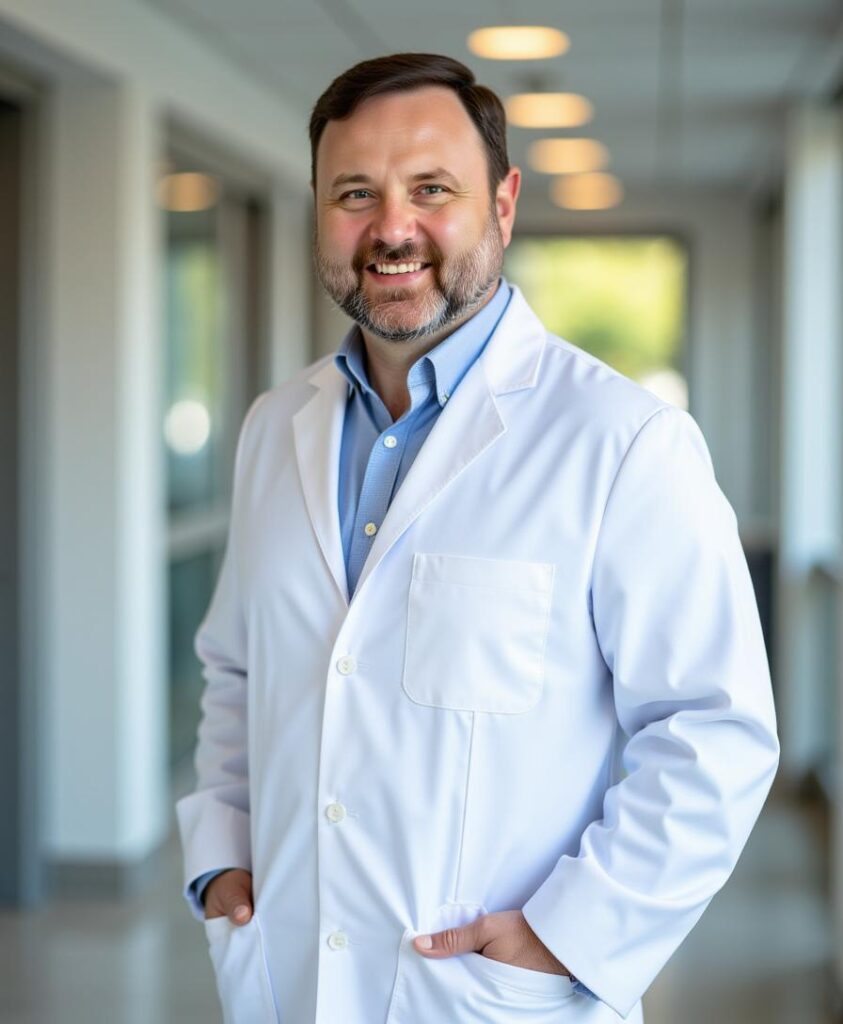
Dr. Justin B. Williams, Program Director

Welcome from the Program Director

Dear Prospective Residents,

Welcome to the Methodist Healthcare System of San Antonio Emergency Medicine Residency Program. I am delighted that you are considering our program as the place to begin your career in Emergency Medicine.

Emergency medicine is a remarkable specialty. We meet patients and families during some of the most difficult and consequential moments of their lives. We are asked to make important decisions with limited information, perform lifesaving procedures, lead multidisciplinary teams, and remain compassionate in an environment where the unexpected is routine. It is a specialty that demands clinical knowledge, procedural skill, sound judgment, teamwork, and leadership.

We have built our residency around those principles.

Our mission is to develop highly skilled, compassionate emergency physicians who are prepared to excel in fast-paced, high-acuity clinical environments and ultimately care for any patient, with any emergency, in any environment. Our educational program emphasizes exceptional clinical experience, evidence-based medicine, procedural excellence, progressive autonomy, mentorship, scholarship, and leadership.

An Exceptional Clinical Training Environment

The clinical home of our residency is Methodist Hospital, an 811-bed tertiary acute-care hospital in San Antonio's South Texas Medical Center. Its Adult Emergency Department cares for more than 70,000 patients annually, with more than 20,000 requiring hospital admission—providing our residents substantial exposure to high-acuity and medically complex emergency care. The hospital's advanced capabilities include comprehensive stroke care, heart transplantation, trauma care, and the region's largest ECMO program.

Our residents also receive extensive pediatric emergency training at Methodist Children's Hospital throughout all three years of residency. The Children's Emergency Department sees more than 42,000 pediatric patients annually and includes 40 private emergency treatment rooms. Residents additionally train in a 24-bed PICU and within a children's hospital offering a 94-bed Level IV NICU and advanced pediatric subspecialty care.

But one hospital cannot represent every environment in which an emergency physician will eventually practice. For that reason, we intentionally created a diverse clinical training network.

At Methodist Hospital Metropolitan, residents experience a busy urban and community emergency department with more than 55,500 annual visits and progressively assume greater responsibility for resuscitation, procedures, patient flow, clinical decision-making, and departmental leadership. Dedicated trauma training occurs at St. David's South Austin Medical Center, a 368-bed Level II Trauma Center with a Shock Trauma Intensive Care Unit.

Our curriculum extends even further through longitudinal EMS experience and extensive critical care training, including the PICU, MICU, cardiovascular ICU, surgical ICU, neurological/surgical ICU, and lung and respiratory critical care—including ECMO.

Education, Mentorship and Leadership

Clinical volume alone does not create an outstanding emergency physician. Great residency training requires deliberate education, graduated responsibility, meaningful feedback, and faculty who are genuinely invested in the development of their residents.

Our dedicated Graduate Medical Education space supports simulation, didactics, procedural training, and resident education. Residents participate in structured simulation for critical resuscitations and high-risk procedures, while emergency ultrasound is incorporated longitudinally throughout training.

I am particularly proud of the faculty we have assembled. They bring expertise in Emergency Medicine, Pediatric Emergency Medicine, Emergency Ultrasound, EMS, Disaster Medicine, Trauma, Critical Care, and scholarly activity. Many have extensive experience teaching residents at established Emergency Medicine programs, including the San Antonio Uniformed Services Health Education Consortium at Brooke Army Medical Center and the University of Texas Health Science Center at San Antonio.

Our faculty includes the immediate past President of the American Academy of Emergency Medicine – Dr. Robert Frolichstein and the internationally acclaimed speaker and founder of the internationally acclaimed FOAM website RebelEM.com – Dr. Salim Rezaie. Dr. Gillan Schmitz, former President of the American College of Emergency Physicians, previously worked with our program.

Our goal is not simply to help you complete residency.

Our goal is to help you become the physician whom your colleagues want standing beside them when the department is at its busiest and the patient is at their sickest.

A Remarkable City to Call Home

Residency is also three years of your life, and we believe where you live matters.

San Antonio is an extraordinary place to call home.

With more than 1.5 million residents, San Antonio combines the opportunities and amenities of one of America's largest cities with a distinctive sense of community. The city offers the 15-mile River Walk, the Pearl, professional sports, outstanding restaurants, live music, museums, extensive greenway trails, and easy access to the Texas Hill Country.

San Antonio's history and culture are equally distinctive. It is home to Texas's only UNESCO World Heritage Site, encompassing the San Antonio Missions, and has been recognized as a UNESCO Creative City of Gastronomy for its remarkable culinary heritage.

It is a city where you can work in a major tertiary medical center and, after your shift, be on the River Walk, at the Pearl, attending a Spurs game, running or cycling on the city's more than 100 miles of greenway trails, or heading into the Hill Country.

An Opportunity to Build Something Extraordinary

Perhaps what excites me most about our program is something that cannot be captured by patient volumes, rotation schedules, or facilities.

We are building something new.

There is a unique opportunity that comes with joining a new residency program. You do not simply inherit traditions established by the residents who came before you.

You help create them.

Our inaugural residents will have the opportunity to help define the culture, traditions, identity, and ultimately the legacy of this program. We are looking for residents who embrace that opportunity—physicians who are curious, hardworking, compassionate, collaborative, and ready to lead.

We want residents who seek rigorous clinical training but also want to contribute something of themselves to the program they join. We want people who will challenge us to continually improve, support their fellow residents, serve our patients and community, and eventually become leaders within our specialty.

If that describes what you are looking for in Emergency Medicine residency training, I invite you to explore our program and learn more about the opportunities available at Methodist Healthcare.

I hope you will consider joining us in San Antonio.

Come train with us. Come lead with us. And come help us build something extraordinary.

Warm regards,

Justin B. Williams, MD

Program Director

Emergency Medicine Residency Program

Methodist Healthcare System of San Antonio

San Antonio, Texas

Residency Curriculum

Curriculum rotation schedule for EM-1, EM-2, and EM-3 with weekly breakdowns per rotation

Our Curriculum

EM1Intern year is designed to lay the foundation with the clinical experience and skills needed for the rest of residency. Rotations include a broad array of disciplines including core experiences in Adult Emergency Medicine, Pediatric Emergency Medicine, Medical and Pediatric Critical Care, and Trauma.

Other high-yield rotations in Anesthesia, EMS and ED Ultrasound allow our interns to further develop essential clinical skills. Rotations primarily take place at Methodist Hospital Adult Emergency Department (AED), Methodist Hospital Childrens Emergency Department (CED), and the St. David’s South Austin Medical Center.

The interns will develop the broad foundational knowledge base and technical skills necessary to produce procedurally and clinically competent emergency physicians.

EM2The primary goal of the EM2 year is to build on the foundation and add to the technical skills and knowledge specific to emergency medicine. This is accomplished through rotations in Adult Emergency Medicine, Pediatric Emergency Medicine, Surgical and Lung Rescue Critical Care, and Trauma.

In the AED, EM2 residents run the emergency department, managing a diverse number of medical, and surgical complaints. They will be an integral part of the ECMO, STEMI and Stroke Alert activations caring for critically ill patients. EM2 residents will also be responsible for primary management of trauma patients including all trauma airways. At Metropolitan Methodist Hospital, EM2s experience emergency medicine at a private, community hospital.

Continued rotations in the CED teaches EM2s how to work-up and manage pediatric medical emergencies. EM2 will get the opportunity to gain crucial experience caring for our obstetrical patients working in the Obstetrical Emergency Department (OBED) and Labor and Delivery. They also take part in high risk deliveries and neonatal resuscitations. Finally, rotations in Surgical Intensive Care and Lung Rescue Intensive Care advance resident knowledge of how to care for the sickest of patients. Lastly, 4 weeks of elective time is built into the EM2 year.

EM3During the senior year, emphasis is placed on mastering clinical emergency medicine and developing tangible leadership skills. In the AED, the supervisory role of the EM3 residents includes running and managing the flow of the emergency department. This role includes oversight over patient care delivered by medical students, off-service interns, as well as first and second-year EM residents. During shifts at the AED, EM3s take full ownership of their patients, functioning with more autonomy than during previous years.

There is additional experience in pediatric EM in the CED. Residents gain additional critical care experience with a senior medical and neurosurgical ICU rotation.

The clinical education of EM3s is further developed through rotations in Advanced Ultrasound while elective time is built into the EM3 year to facilitate deliberate career exploration and development. There is also a month of administrative time built into the EM3 year for development of leadership skills critical for independent practice.

Professional Development

The professional development curriculum is designed to equip residents with the interpersonal, communication, and professional skills necessary to deliver compassionate, patient-centered care while fostering the leadership abilities required to excel within multidisciplinary healthcare teams. Through structured educational experiences, residents develop competencies in professionalism, effective communication, conflict resolution, feedback, mentorship, wellness, and healthcare leadership, preparing them to serve as future leaders in Emergency Medicine and beyond.

In addition, this part of the curriculum will provide a comprehensive framework for developing lifelong learning skills through the critical review of the landmark and contemporary literature that underpins current clinical practice. Residents are guided in the appraisal of research design, methodology, statistical analysis, and interpretation of results, enabling them to critically evaluate the medical literature and translate high-quality evidence into informed clinical decision-making and evidence-based patient care.

Personal Development

The personal development curriculum will be designed to cultivate well-rounded emergency physicians who provide compassionate, equitable, and culturally responsive care. Through interactive discussions, case-based learning, reflective practice, and community engagement, residents will develop the knowledge, skills, and self-awareness necessary to care for patients from diverse backgrounds with cultural humility and sensitivity. The curriculum emphasizes the principles of diversity, equity, inclusion, and belonging while exploring the impact of social determinants of health, implicit bias, structural inequities, and barriers to care on health outcomes. Residents will be challenged to examine their own perspectives, foster inclusive clinical environments, and advocate for vulnerable populations. By integrating these principles into everyday clinical practice, the curriculum aims to prepare residents who not only deliver exceptional patient-centered care but also contribute to advancing health equity and improving outcomes for the communities they serve.

Core Content

The core content curriculum is designed to develop residents' expert understanding of the pathophysiology, pharmacology, diagnosis, and evidence-based management of the broad spectrum of medical, surgical, traumatic, and behavioral conditions encountered in the practice of Emergency Medicine. Core content will be based on the American Board of Emergency Medicine (ABEM) Model of Clinical Practice.

Signs, Symptoms, & PresentationsCardiovascular DisordersRenal & Urogenital DisordersTraumatic DisordersNervous System DisordersCutaneous DisordersProcedures & SkillsHead, Ear, Eye, Nose & ThroatEnvironmental DisordersSystemic Infectious DisordersHematologic DisordersImmune System DisordersThoracic-Respiratory DisordersMusculoskeletal DisordersPsychobehavioral DisordersAbdominal & GastrointestinalObstetrics & GynecologySystems-Based Practice and Administration

Simulations / Cadaver Labs

The simulation and cadaver laboratory curriculum provides residents with deliberate, hands-on practice of high-acuity, low-occurrence (HALO) procedures in a safe learning environment designed to build technical proficiency and clinical confidence. Through cadaver-based procedural training and high-fidelity simulation, residents will gain experience in essential emergency medicine procedures including advanced airway management, chest tube placement, pericardiocentesis, cricothyrotomy, central venous access, and other life-saving interventions.

Medically complex and traumatic resuscitation scenarios will emphasize crisis resource management principles, focusing on team leadership, role assignment, close-loop communication, situational awareness, and interdisciplinary collaboration to optimize patient outcomes.

Please explore the cadaver lab here

also explore our other cadaver lab.

Didactics

Daily

  • Morning report / case conferences
  • Faculty teaching rounds

Weekly protected half-day

  • Attending & chief resident led
  • Simulation curriculum
  • Structured dedicated didactics
  • Resident Jeopardy!

Monthly

  • Journal club
  • Board review
  • M&M conference
  • Scholarly activity and research
  • Grand rounds
  • Well-being sessions